Tell us about the job
Takes about a minute. No obligation.
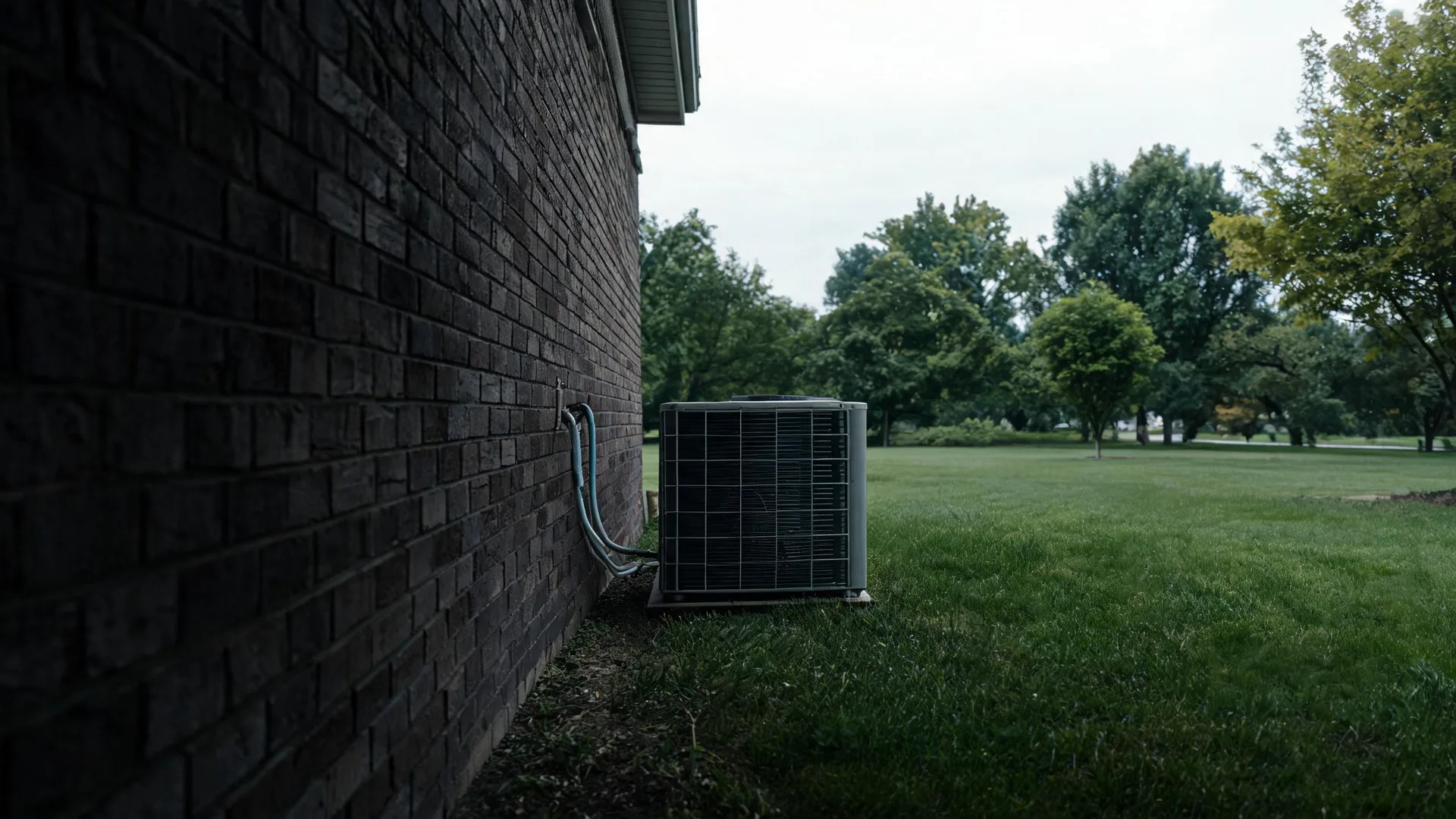
The compressor in a central AC unit does its wearing in a concentrated burst. Homes in York County, ME run cooling in a single month of the year, July. Every start, every stop, every hour the contactor closes and the condenser fan spins happened inside that same window, year after year. A contractor diagnosing a failed compressor here checks cumulative cycle fatigue first, because the equipment had no shoulder seasons to spread the load across. Refrigerant pressure, contactor pitting, and capacitor condition all reflect how hard those weeks ran the system, not how many calendar months it sat in the house.
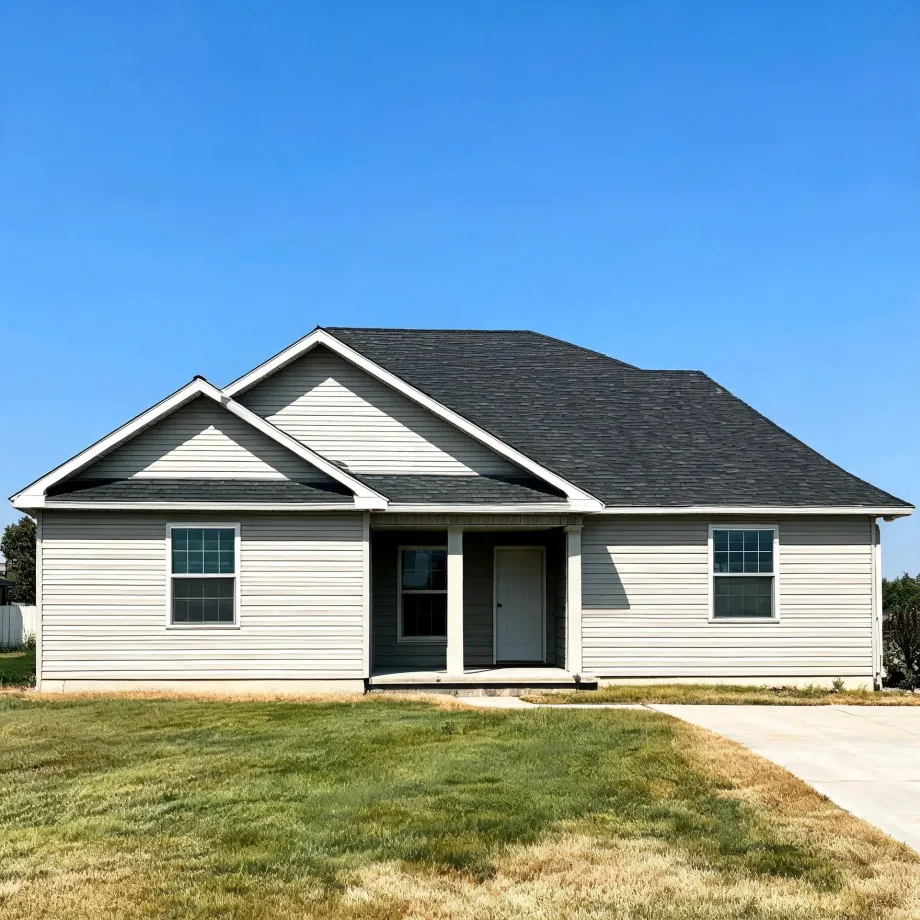
Ductwork in a house this old was installed around a system that has long since been replaced, often more than once, and what survives between the walls tells a contractor what the current unit has been working against. Half the homes in York County, Maine were built in 1980 or earlier (2020-2024 ACS 5-year). When a compressor or coil fails in stock like this, the question a contractor has to answer is whether the replacement part is still made for what is actually in the house, or whether the repair points toward a different decision entirely. That answer comes from the opened unit, not from the permit date.
The Parts of a Central AC a Contractor Checks First
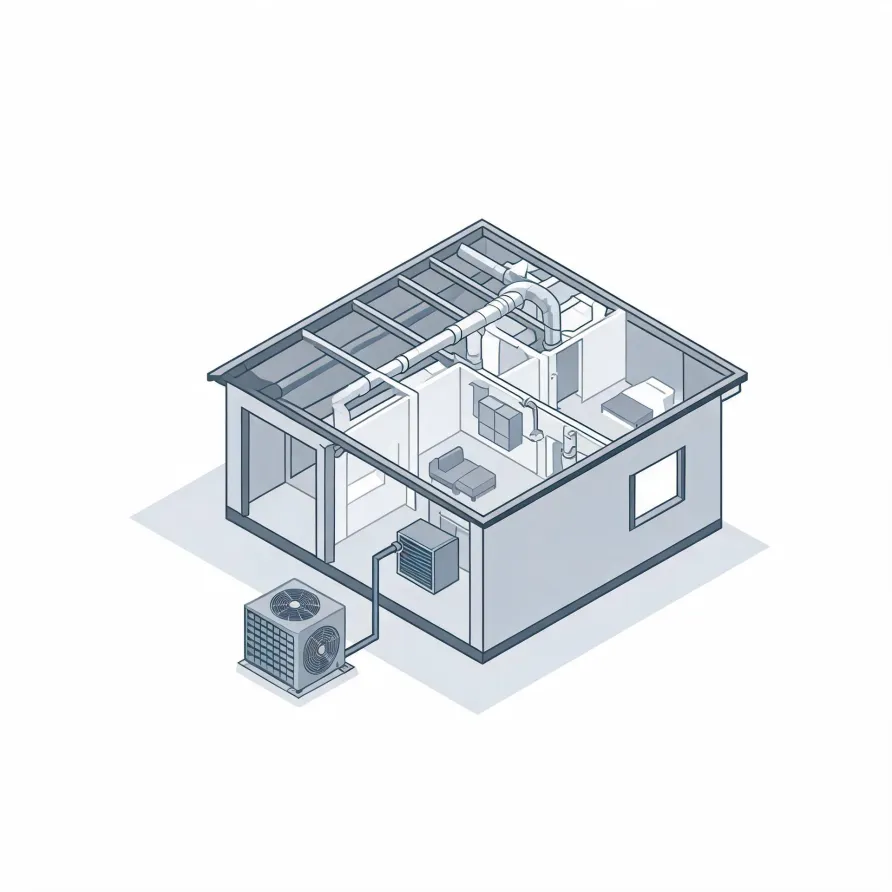
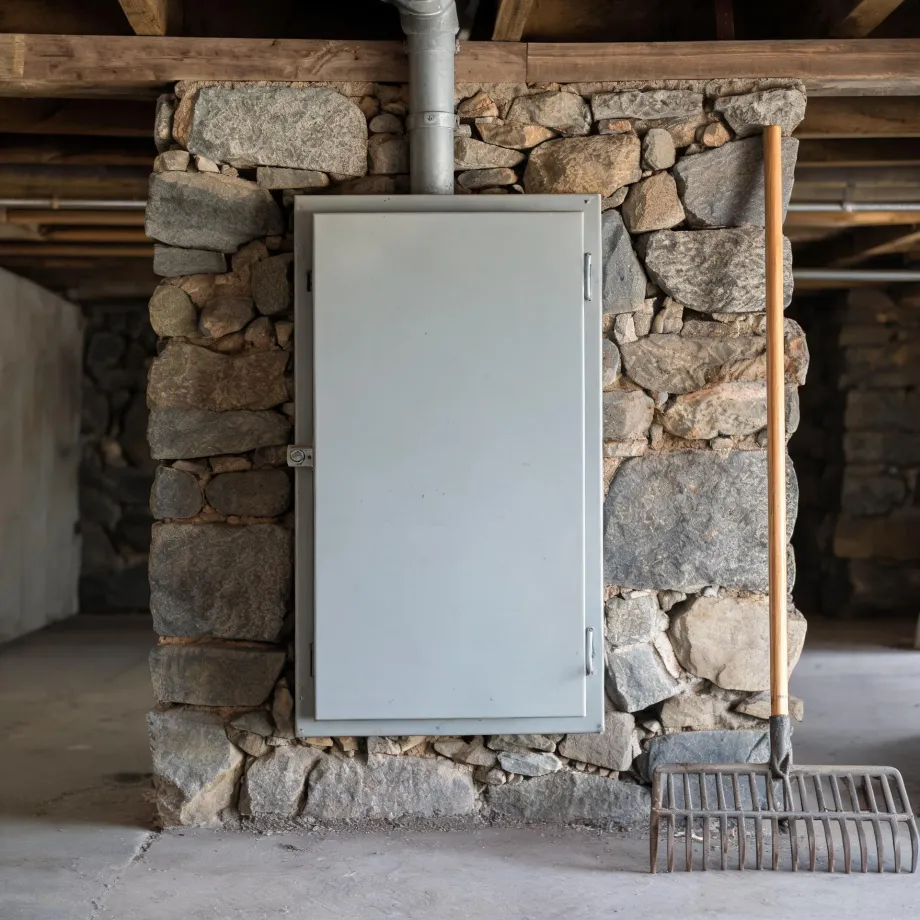
The outdoor condenser unit sits outside the house, usually on a pad beside the foundation, and it is where heat gets shed to the open air. The indoor air handler or furnace coil sits inside, most often in a basement, attic, or utility closet. When a central AC system stops cooling or starts behaving strangely, the fault is almost always traced back to one of these two units.
The refrigerant lines run between the two units, carrying the working fluid that makes the whole exchange possible. The thermostat on the interior wall reads the house temperature and tells the system when to run. A contractor will also check the condensate drain, a small line that carries moisture away from the air handler, because a clogged drain is a common source of water damage and system shutdowns.
The drawing shows a typical central AC layout, and a licensed contractor will determine which components and access points apply to your specific home.
Find a contractor in York CountyYork County, by the numbers
209 severe weather events were recorded in York County, Maine between 2015 and 2024.
NOAA National Centers for Environmental Information, Storm Events Database, bulk CSV export, events 2015-01-01 through 2024-12-31.Half the homes in York County, Maine were built in 1980 or earlier (2020-2024 ACS 5-year).
U.S. Census Bureau, 2020-2024 American Community Survey 5-Year EstimatesYork County, Maine holds 115,091 housing units (2020-2024 ACS 5-year).
U.S. Census Bureau, 2020-2024 American Community Survey 5-Year EstimatesOwners occupy 77.3% of the occupied homes in York County, Maine (2020-2024 ACS 5-year).
U.S. Census Bureau, 2020-2024 American Community Survey 5-Year EstimatesCodes & Standards Governing Central AC Repair in York County, Maine9 sourced rules and standards
What the repair visit looks like
Split-system central air conditioners rated below 45,000 Btu/h manufactured on or after January 1, 2023 must meet a federal minimum of 13.4 SEER2.
Split-system central air conditioners rated at or above 45,000 Btu/h manufactured on or after January 1, 2023 must meet a federal minimum of 13.4 SEER2.
Split-system central air conditioners manufactured between January 1, 2015 and December 31, 2022 had to meet 13 SEER, the metric that preceded SEER2.
Single-package central air conditioners manufactured on or after January 1, 2023 must meet a federal minimum of 13.4 SEER2.
Space-constrained central air conditioners manufactured on or after January 1, 2023 must meet a federal minimum of 11.7 SEER2.
Federal efficiency standards for split-system central air conditioners and heat pumps are set on each certified combination of outdoor unit and indoor coil rather than on the outdoor unit alone.
Residential and light commercial air conditioning and heat pump systems assembled in the field, including mini-splits and unitary systems, may not be installed on or after January 1, 2025 using a refrigerant with a global warming potential above 700.
A field-assembled system whose specified components were all manufactured or imported before January 1, 2025 carries no installation compliance date under the refrigerant restrictions and may still be installed.
What York County and Maine Require for HVAC Repair
Maine licenses the fuel-burning side of heating rather than HVAC as a trade: a Maine Fuel Board licence is required to install or service solid fuel, oil, propane or natural gas burning equipment, including pellet-fired central heating appliances. Air conditioning is not named anywhere in the chapter.
Severe Weather Events in York County
Storms, heat, and hard weather put hours on AC equipment that calm seasons never would. How much stress a system has absorbed over its life is a local fact, and it shapes what a repair technician finds when they open the unit.
209 severe weather events, 2015–2024. Source: NOAA National Centers for Environmental Information, Storm Events Database.