




Profile view of a bearded man wearing a dark green baseball cap and a dark gray T-shirt against a plain light background.

Central AC or mini split for a Maine home

Step 1 of 3: Equipment

Should I get central AC or a mini split in Maine?

Maine summers don't hit you with the same heat and humidity you'd get further south, so the idea of installing central air for a few warm months can feel like overkill. At the same time, you've got an oil furnace handling winter heat, and electricity here costs more than almost anywhere else in the country. You're trying to figure out which cooling option actually makes sense for your house and your wallet.

A mini split makes more sense for most Maine homes

A mini split cools the rooms you actually use, without the ductwork a central system needs. Most Maine homes that heat with oil never had ducts installed, since the furnace sends heat through baseboard or radiators instead. Adding ducts for central air means cutting into walls and ceilings, on top of the equipment itself. A mini split skips that step. It mounts on a wall or ceiling and runs on its own refrigerant lines, so installation is far less invasive. It also runs in reverse as a heat pump, which gives you a second heat source alongside your oil furnace. With electricity priced the way it is here, that matters less for summer cooling and more for what it can do the rest of the year.

A dim bedroom with a bed in the foreground, a radiator against the wall, and a box fan set in a sunlit window with sheer curtains and green trees outside.

Upstairs, the heat sits in the room long after the sun's gone down. The box fan in the window just pushes the same warm air around. You lie on top of the sheets, listening to it rattle, waiting for the house to let go of the day's heat. It's a June night, not even the worst of it yet, and you're already doing the math on August. Downstairs is fine. Up here never is. By ten thirty you've given up on sleeping through it and gone looking for a second fan, knowing full well it won't do any more than the first one did.

Central AC vs Mini Split in Maine

Central AC

  • Central air cools every room through the same ducts your oil furnace already uses, so there's no unit mounted on the wall in each room.
  • If your ductwork is already there and sized right, a contractor can tie into it instead of running new lines through the house.
  • One thermostat controls the whole house, which suits a home where everyone wants the same temperature.
  • Ducts that run through an attic or basement lose some of that cool air before it reaches the room.
  • Installing central air where no ducts exist means cutting into walls, floors, or ceilings to run them.

Mini split

  • A mini split cools only the rooms where you put a head, so you can leave a guest room or basement alone.
  • No ductwork means installation is a matter of a line set between the outdoor unit and each indoor head.
  • Each room's head has its own setting, so the room that gets afternoon sun can run cooler than the rest of the house.
  • Several homes here use a mini split for cooling and let the oil furnace keep handling the heat.
  • A multi-room system means an outdoor unit and a head for every room you want to cool, and the wall-mounted heads are visible in each one.
A man in a blue sweatshirt reclines with closed eyes in a brown leather armchair in a living room with a bookshelf, houseplant, sofa, window, and a side table holding newspapers and a dark mug.
A bearded man in a gray pullover reclines with closed eyes on a brown leather sofa in a sunlit room with a window, framed picture, potted plant, and a wooden cabinet holding papers and a dark mug.
A man in a gray sweater leans back with closed eyes in a brown leather armchair beside a wooden side table holding a dark mug and a folded newspaper, with bookshelves and a window seat behind him.
A man in a green sweater reclines in an armchair with his eyes closed and a slight smile, beside a window with plants, a small table holding a mug and folded newspaper, and bookshelves behind him.

Done looking for an air conditioner pro

Answer a few questions instead of calling shop after shop.

You only hire the pro if you want to.

Why ductwork changes the answer

A mini split moves heat with a compressor and a refrigerant line, no ducts needed. Central air needs a full duct system to push cooled air to every room, and most homes here already have that ductwork in place from the oil furnace. If yours is sized right and reaches the rooms you want cooled, a contractor can tie central air into it. If it doesn't exist, or only serves part of the house, installing central air means running new ducts, which is a bigger job than adding a mini split.


What a mild summer asks of the equipment

Maine doesn't put the same load on a cooling system that a hot, humid climate does. A mini split lets you cool only the rooms you're using, which matters when a window unit or a few hot nights a year is really what's driving the decision. Central air cools the whole house evenly through the ducts, which matters more if several rooms run hot at once. Either way, the equipment here runs fewer hours a year than it would further south, so sizing it right matters more than overbuilding it.

A gray-haired man with a beard in a blue button-placket shirt reclines on a couch with his eyes closed, beside a sunlit window with a green plant.
A woman in a cream knit sweater sits in an armchair with her eyes closed near a window showing yellow autumn foliage, with a mug on a round wooden side table beside her.

Central AC

If your ducts are already there from the oil furnace, a contractor can use them for cooling and you skip finding separate equipment for each room.

Hand off my installation

Mini split

No ductwork needed, so a contractor can install one in a room that runs hot without touching the rest of the house.

Hand off my installation

What's making this decision feel urgent right now

You notice it in the rooms that never cool down, the ones at the top of the stairs or over the garage, where the air stays thick well past bedtime. Maybe you've got a window unit groaning in one room and nothing in the others, so the house never feels evenly cool. Maybe you're staring at your oil furnace ductwork wondering if it can do double duty, or whether that even makes sense for a house that only needs relief a few months a year. None of this is an emergency. But another summer of box fans and one hot bedroom is the kind of thing that makes you want an answer before the weather turns warm again, not after.

An outdoor air conditioning condenser unit on a concrete pad at the corner of a house, next to vinyl siding and a plain light-colored wall, with grass and a mulch bed in the foreground.

When the whole house runs hot

If every room gets warm by July, not just the one over the garage, central air is built for that. One system, one thermostat, cool air reaching every room through the ducts already running from your oil furnace. A contractor sizes the compressor to the house, not room by room, and you're not stacking window units or managing separate remotes for each mini split head.

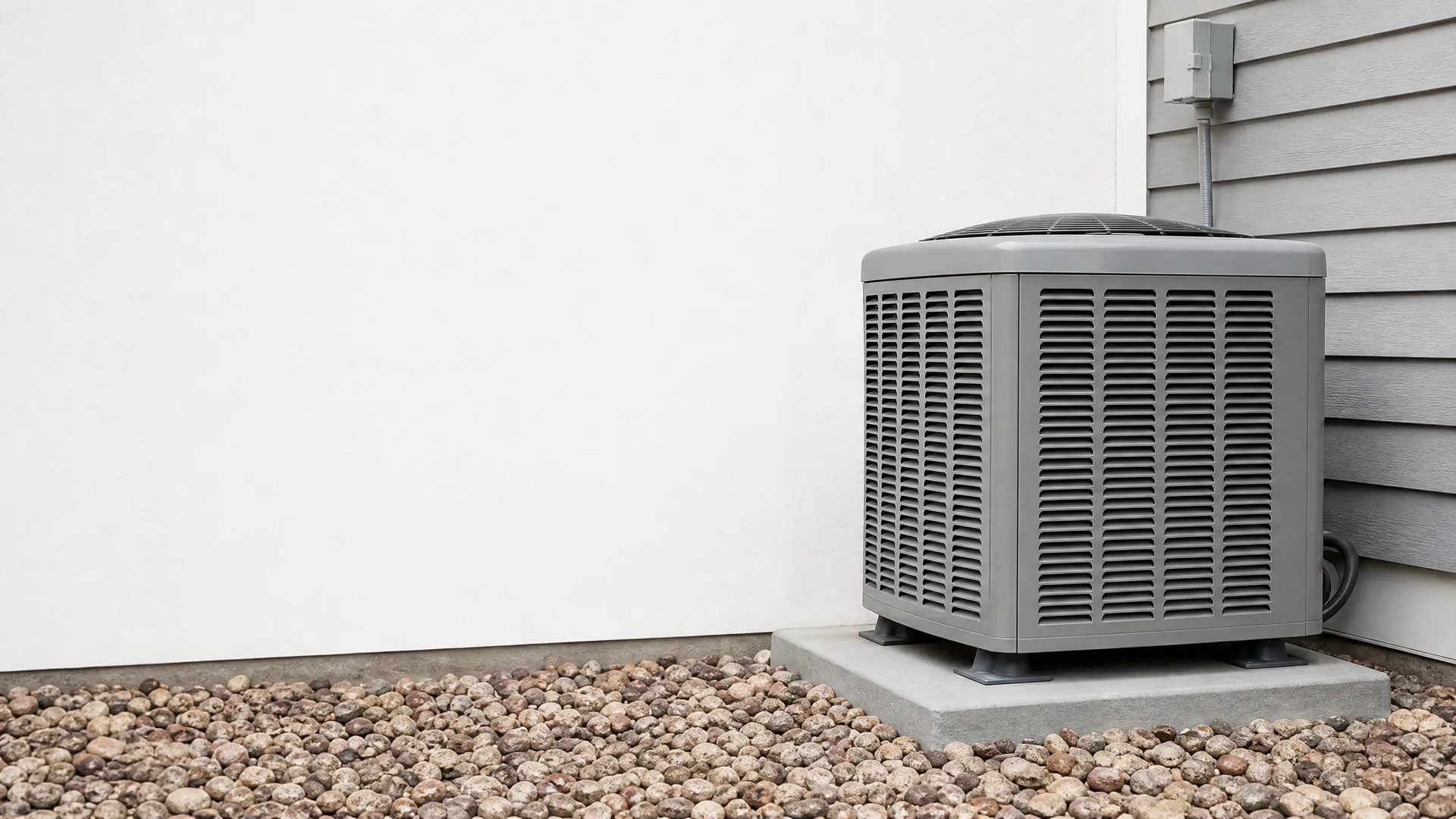
A gray outdoor air conditioning condenser unit sits on a concrete pad beside a white stucco wall and gray horizontal siding, surrounded by rounded landscaping gravel, with an electrical disconnect box mounted on the siding above.

When it's really just one room

If the problem is one room, maybe the bedroom upstairs, a mini split answers that without touching the rest of the house. A contractor mounts the indoor unit on the wall, runs the line out to a compressor outside, and that room cools on its own schedule. No ducts to open up, no work in rooms that were already fine.

Power costs 27.69 cents per kilowatt-hour statewide

At 27.69 cents a kilowatt-hour, every degree you run an air conditioner shows up on the bill fast. A mini split cools only the room you're in, so you're not paying to chill rooms nobody's using. Central air cools the whole house at once, which costs more to run but means no room gets left out.

EIA-861 2025 statewide residential average

If your ductwork is already in from the oil furnace and the whole house runs warm, central air is the straightforward answer. If it's one or two rooms that never cool off and you'd rather not run new ductwork, a mini split handles that without touching the rest of the house. Either way, the equipment has to be sized and installed by someone who's seen how Maine homes are built, not guessed at from a chart. Once you send the form, you're done hunting through listings, calling shops to ask if they even do this kind of install, and repeating the same details about your house to every one of them. A contractor who installs this equipment gets in touch, looks at what you've actually got, oil furnace, ductwork or none, the rooms that run hot, and tells you straight which one fits. You've already done the thinking. What's left is getting someone qualified to do the work, and that part's no longer on you.

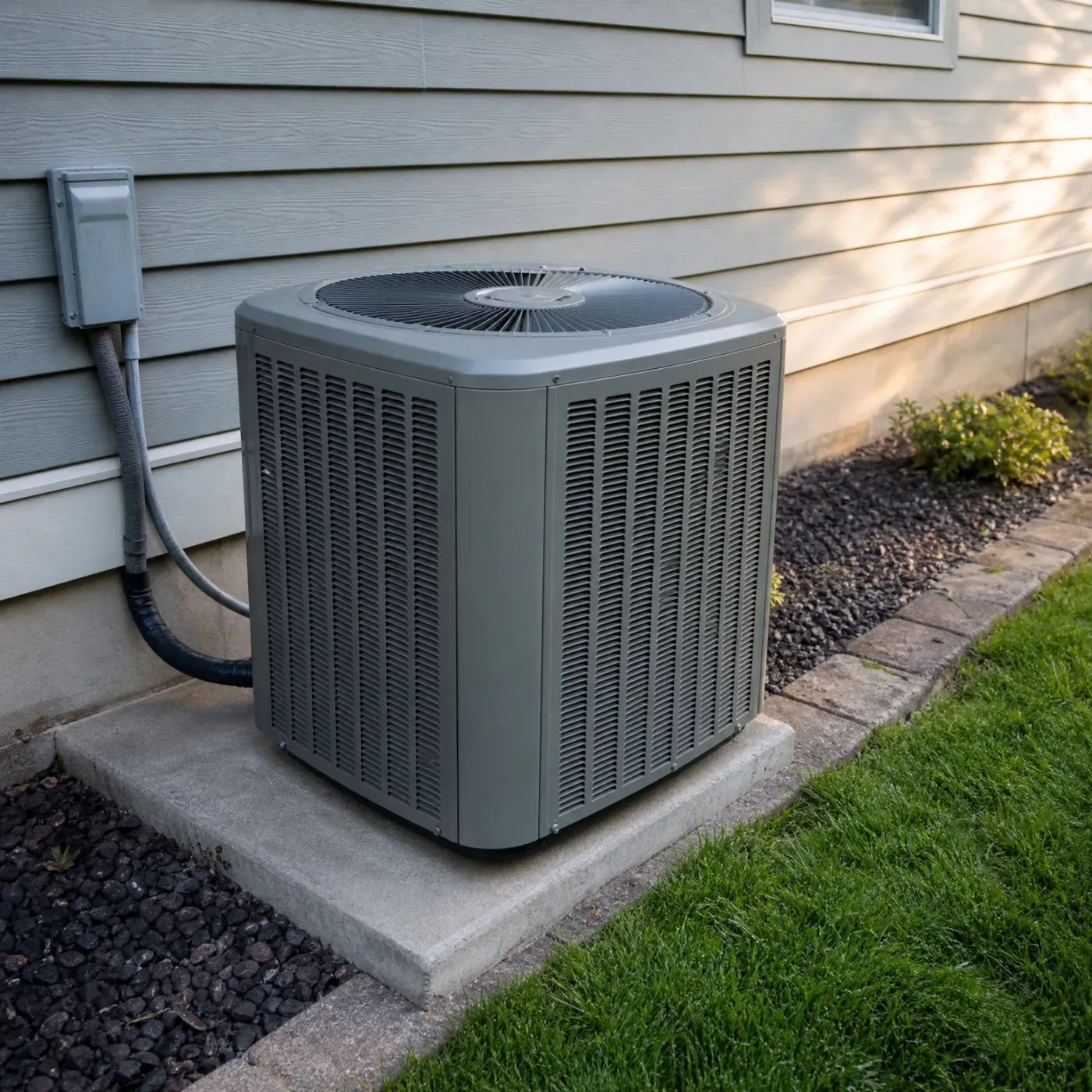
A gray outdoor air conditioning condenser unit on a concrete pad beside a house with horizontal lap siding, with a wall-mounted disconnect box and conduit, lava rock mulch, a shrub, and grass nearby.

Stop chasing an air conditioner pro

Skip calling around

Skip collecting and comparing quotes for the new air conditioner.

No fee to send it, and nothing to sign.