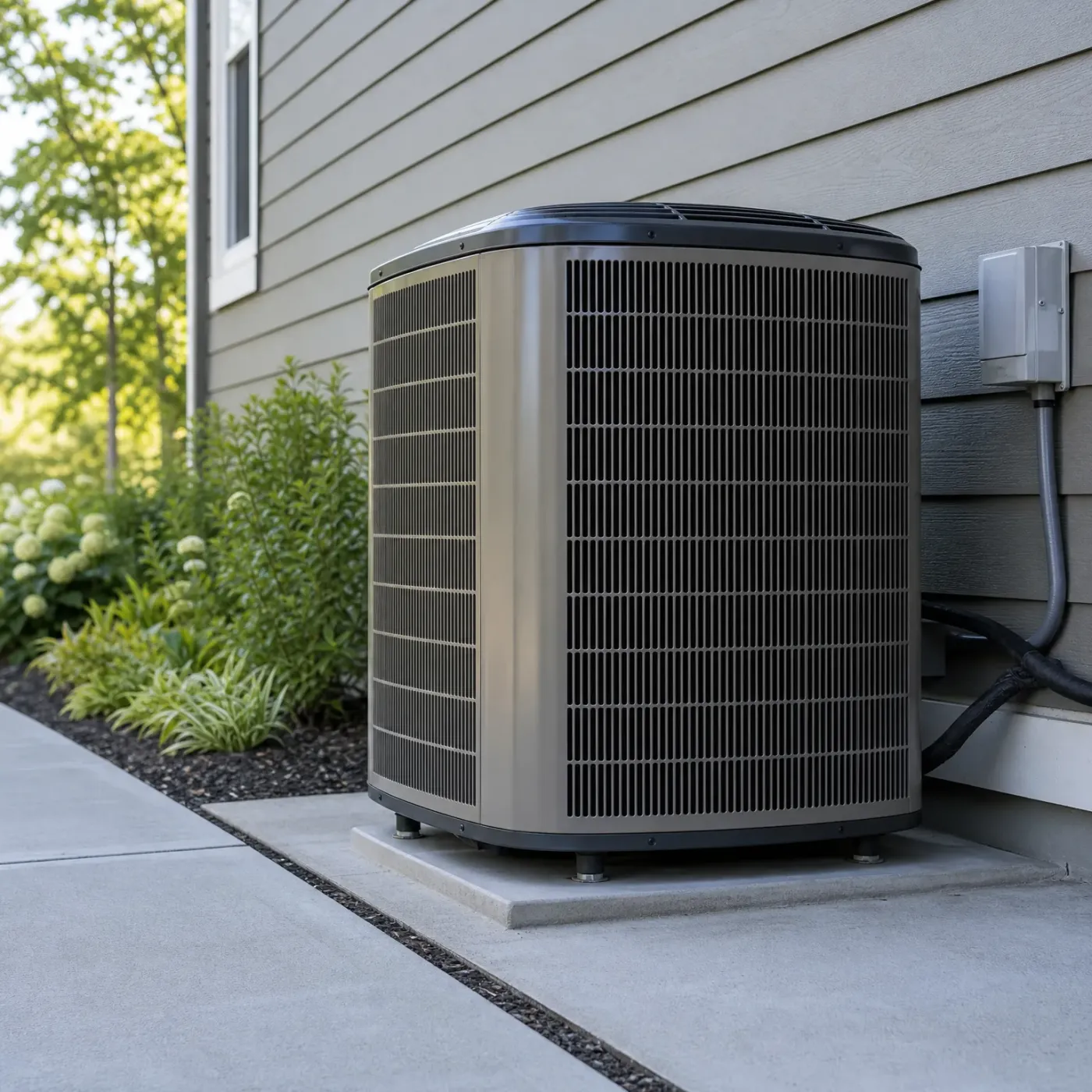
A local pro who services air conditioners gets in touch about the tune-up.
Maine summers don't ask much of an air conditioner, not the way they do farther south. But the stretches of warm, still weather in July and August still catch some units off guard, especially ones that sat untouched since last September. A unit that's low on refrigerant or has a dirty coil will run longer than it should to do the same job, and on Maine's power rates, that difference shows up fast.
Most homes here heat with oil, which means the AC is its own system, not something tied into a furnace that gets looked at every fall. It's easy for it to go a couple of years without anyone checking it, since nothing forces the issue the way a cold snap does with a furnace.
A quick check before the warm weather settles in catches most of what would otherwise turn into a breakdown in August: a capacitor on its way out, a coil that needs cleaning, a thermostat that's not reading right. None of that takes long to find if someone knows what to look for.
Getting matched here means getting connected with a licensed contractor working near you in Maine, someone who services this kind of equipment through the season and has a sense of what tends to go wrong in homes like yours. You'll hear from that one contractor directly, not a handful of companies competing for your callback.
Answer a few questions about your system and your home, and the match gets made from there. What you get first is a straightforward look at where your AC stands before summer puts any real demand on it.
Getting your AC ready for summer means having it checked before the first hot stretch hits, not after. A system that sat idle since last September can have a dirty coil, a low refrigerant charge, or a fan motor that's starting to strain, and none of that shows up until the unit is asked to run for days straight. In Maine, that first real test might not come until July. By then, a contractor's schedule is full of people whose AC quit on the first ninety-degree day, and you're waiting in line behind them. Getting it looked at in spring, while the weather's still mild, means any worn part gets caught and replaced before it fails, and you're not without cooling during the one stretch of the year you actually need it. It also means the unit runs on less power to do the same job, which matters here more than most places.
A tune-up isn't a quick look and a sticker on the unit. It starts outside, where the condenser sits exposed to a winter's worth of pollen and whatever blew in during fall cleanup. Gauges go on the lines to see if the refrigerant charge is where it should be, since a system running low won't pull the heat and humidity out of the air no matter how long it runs. Inside, the coil gets checked too, because dust cuts airflow faster than most people expect, and the unit ends up working harder to move the same amount of air. The capacitor gets tested with the system under load, not just looked at, since a weak one will still start the compressor most days until it suddenly doesn't. Electrical connections get snugged down, because a season of the unit running and vibrating works screws loose. Last comes the condensate line, cleared out so water drains outside instead of backing up into the house. None of this takes long, but skipping it is how a small problem turns into a July breakdown.
What a tune-up actually checks
A technician checks refrigerant charge with gauges, since a system even slightly low won't pull humidity or heat out the way it should.
The condenser coil outside gets cleared of pollen, grass clippings, and cottonwood fluff that built up over the fall and winter.
The indoor coil gets checked for dust buildup, since airflow drops fast once it's coated and the system has to run longer to do the same job.
The capacitor gets tested under load, because a weak one can let the compressor start hard for weeks before it fails outright.
Electrical connections at the disconnect box and inside the unit get tightened, since loose contacts arc and burn over a season of vibration.
The condensate drain line gets checked for clogs, since algae and debris can back it up and send water into the house instead of outside.
Clean coil, clear airflow, and the fan running quiet the way it did last July.
A coil packed with debris like this makes the compressor work harder to move the same heat.
Check It Now or Risk It Later
Spring Checkup Now
A technician can get to it before the first real heat wave, when everyone else is also calling.
Any refrigerant leak or weak capacitor gets caught and fixed while parts are easy to schedule.
The unit runs on a clean coil and full charge from the first warm day instead of struggling into the season.
You're not choosing between comfort and a service appointment when it's 85 degrees out.
A local contractor who works on these units every spring knows what tends to fail after a Maine winter.
Waiting Until It's Hot
You find out something's wrong the same week you actually need the AC running.
A unit with a dirty coil or low charge from sitting all winter has to work harder right from the start.
Appointments get harder to book once the warm stretches of July and August arrive and everyone calls at once.
A small issue caught in May can turn into a bigger repair by the time it's finally looked at in July.
Power here already costs more than most places, and a strained system during a heat wave adds to that.
Running clean
This is what a unit sounds like when nothing's wrong: coil clear, fan steady, the pad around it bare. Air moves through without the compressor straining to make up for a dirty coil or a weak charge. This is the condition a spring checkup is meant to hold onto through August.
Working against itself
Leaves and dirt piled against the base block airflow across the coil, so the unit pulls in less of the outside air it needs to dump heat. Refrigerant lines exposed along the wall take the same weathering. A unit left like this since last September is working harder for less cooling.
Matched to your air conditioner job
A licensed local pro takes the request for your air conditioner tune-up.
Describe your air conditioner job, and a local pro who handles it gets in touch.
No charge to send it. You decide if you hire them.
Is your AC telling you something before you turn it on
Go out to the unit before the first warm stretch and take a look. If the condenser is sitting in last fall's leaves and grass clippings, air isn't moving through that coil the way it should. Turn it on and listen. A hum that wasn't there last July, a rattle, or air coming out the vents that feels weaker than it used to all point to something that needs a look. Short cycling, where it kicks on and off every few minutes instead of running a steady stretch, is another sign. None of this is urgent in May. Left alone into a hot, still August stretch, it's the difference between a system that keeps up and one that runs constantly trying to cool a house it can't quite reach, with your power bill showing it.
Sitting clear and ready
This condenser has room to breathe, set on its pad with the gravel and shrub well clear of the fins. Nothing is blocking airflow into the coil. A unit kept like this starts the season pulling heat out the way it's supposed to.
Choked by last season's buildup
Grime has settled into the fins on this one, and it shows on the casing too. Air can't move through a coil like this without a fight, so the compressor runs longer and harder to cool the same space. That strain is what a spring visit catches before July.
Why won't my AC blow cold air after sitting all winter?
After months parked outside through a Maine winter, it's fair to wonder why the air coming out isn't cold when you first switch it on. Nothing was running, nothing was obviously wrong, so the weak or warm air feels like it came out of nowhere. There's usually a specific reason, and it's one a technician checks for before the heat really sets in.
Usually a refrigerant or airflow problem, not the unit failing
A system that sat idle since September can lose a little refrigerant through a small leak that was never a problem when the unit wasn't running hard. Once you turn it on in June, that lower charge means it can't pull heat out of the air the way it did last summer. Airflow plays a part too. If the condenser spent the winter next to piled leaves or snow drifted against the fins, the coil isn't getting clear air through it, and the compressor works harder to move the same amount of heat. Either one shows up the same way to you: air that runs but isn't cold. A technician checks refrigerant charge with gauges and clears the coil before guessing at anything bigger.
A dew point averages 59°F across June, July and August here, based on data for where Maine's homes sit. That's air you can leave a window open to and still sleep fine, which is why your AC isn't fighting the air itself most days. But a system that's slow to pull moisture, from a dirty coil or a low charge, has less work to hide behind here than it would somewhere muggier. You'll notice it faster: the house feels damp even though the thermostat says it's cooled down, or the air coming out doesn't feel as dry as it should.
NASA POWER T2MDEW county cells weighted by homes
Before you get your air conditioner maintenanceAfter you get your air conditioner maintenance
Power costs 27.69 cents per kilowatt-hour statewide
At 27.69 cents per kilowatt-hour, a compressor working harder than it should because of a dirty coil or a weak charge shows up fast on your bill. Keeping the unit running clean is what keeps that cost from creeping up every time it cycles on.
EIA-861 2025 statewide residential average
1
Technician checks refrigerant charge against the system's rated level
2
Condenser coil gets cleared of leaves, grass, and debris
3
Fan motor and blower get tested under a running load
4
Electrical connections and capacitor get checked for wear
A quiet unit through July and August
A clean coil and the right charge is what gets you through a Maine summer without thinking about the air conditioner again. That's the whole job. Once it's checked, you go back to not noticing it, which is how it should be.
Finding a technician on your own means calling around and explaining your unit to whoever picks up. Here, you get matched with one licensed contractor local to Maine, someone who sees this same equipment sit idle all winter every year and knows what tends to go first. They reach out to you directly, so you're dealing with one person who already knows what you're calling about, not a handful of companies competing for the job.