Running clean
This is what a healthy unit looks like outside your house. The fins are clear, the cage is clean, and air moves through it the way it's supposed to. A system kept like this isn't the one giving off a burning smell.

Finding a pro stops being your job
A burning smell from your AC could be dust burning off a dirty coil, or it could be a motor or wire that's actually failing. You don't want to guess wrong on that. This page goes over what causes it and when to shut the system off. Send the form below and skip the part where you're calling around Maine trying to find someone who can look at it.
Let a pro reach outA burning smell from your AC usually points to one of two places: dust baked onto the coil or blower wheel, or wiring and motor parts that are overheating. If the system has been off for a while and you just started it up, a mild dusty smell that fades after a few minutes is normal. A smell that doesn't fade, or one that's sharper, like hot plastic or something electrical, is different. That points to a motor bearing seizing up, a run capacitor failing, or wiring insulation breaking down at a connection. None of those get better on their own, and running the system while it smells that way risks a bigger repair or a breaker that trips for good reason. Shut it off at the thermostat or the breaker if the smell is strong or doesn't fade, and don't run it again until someone's looked at it.




A short, dusty smell when the system first kicks on for the season is one thing. A smell that keeps coming back, or one that's sharp and electrical rather than dusty, is another. You might notice it strongest right at a vent, or near the outdoor unit, or coming from a closet where the air handler sits. Sometimes there's a faint haze with it. Sometimes the system trips off on its own partway through a cycle. If you keep running it while a motor or wire is the actual cause, you're not just risking a bigger repair bill. You're risking that motor seizing for good, or worse, a wiring fault that starts an actual fire.
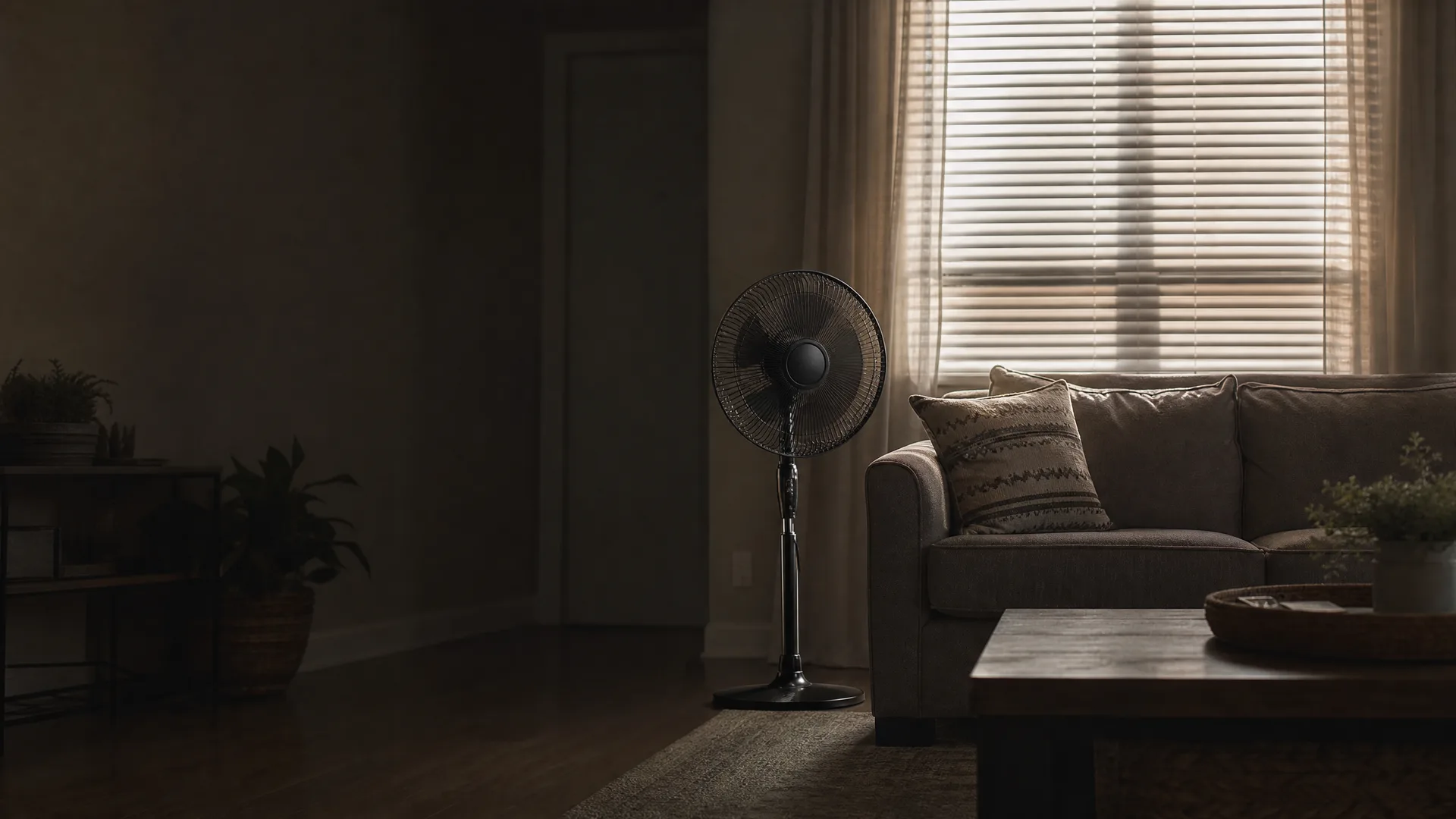
The blinds are down against the afternoon sun and the floor fan is going beside the couch, turning its head back and forth, because the air coming out of the vents isn't doing much on its own. You catch it on one of the fan's passes, a sharp smell instead of the usual dusty one, gone almost as soon as you notice it. You get up and stand by the register anyway, waiting to see if it comes back. Outside it's just a warm Maine July afternoon, nothing the house can't normally handle. You turn the fan to face the vent instead of the couch and listen for the system to cycle again, trying to decide if you actually smelled something or if you're just paying too much attention now.



Maine summers don't feel heavy the way they do farther south, but 59°F is the average summer dew point across the state, per NOAA climate data, and that's humid enough to matter to your AC. A system here is still pulling real moisture out of the air on top of cooling it, which keeps the coil and blower working through full cycles instead of short ones. That's part of why dust and grime bake onto those parts over a season and show up as a burning smell. Once you send the form, you're done tracking down who can look at it. That search ends, not the diagnosis itself.
NASA POWER T2MDEW county cells weighted by homes
A burning smell is not something to sit with while you check reviews and wait for callbacks. Once you've shut the system off or decided it's safe to leave running until someone looks at it, the next job is finding a licensed contractor in Maine who can get to it, and that part is the one you can hand off right now. Send the form and you're done with calling around, done repeating what you smelled and when to three or four different companies, done trying to guess which quote is fair from a list of strangers. With electric rates here among the highest in the country, a motor or blower running wrong isn't just a smell, it's cost, and that's reason enough not to let the search for help drag on. You've already done the hard part, noticing something was off. Let the finding-someone part stop being your job.

Power in Maine costs more than almost anywhere else in the country, so a motor or capacitor that's straining shows up on the bill before you ever smell it. A failing part draws more current to do the same job, and that extra draw is what you're smelling when the odor is sharp instead of dusty. Oil heat means the AC usually sits unused for months between seasons, which gives dust time to settle on the coil undisturbed.

An electrical smell usually means a part has already started to fail, not that it's about to. A technician checks the capacitor, the blower motor, and the wiring at the disconnect for heat damage or a burnt smell at the source. If the odor is coming from the outdoor unit instead of the vents, that points away from the coil and toward the compressor or the fan motor, which changes what gets tested first.

This is what a healthy unit looks like outside your house. The fins are clear, the cage is clean, and air moves through it the way it's supposed to. A system kept like this isn't the one giving off a burning smell.

Dirt and grime packed into the fins and cage like this block airflow across the coil. The motor has to work against that buildup, and a coil layered with debris is exactly where a dusty startup smell turns into something that doesn't go away.



This unit sits clean on its pad, conduit running neat to the disconnect box, nothing blocking the airflow around it. A system like this can still kick up a faint dusty smell when it starts after sitting idle, but it clears in a few minutes and doesn't come back.

The coil guard on this one is caked with grime, the kind that collects season after season without a cleaning. That buildup is exactly what turns a brief startup smell into one that lingers, and it's often sitting right next to a disconnect box that's seen better days too.
At 27.69 cents per kilowatt-hour, running your AC on a part that's straining costs you more here than almost anywhere else. A motor pulling extra current to push through a dirty coil or a failing capacitor shows up on your bill fast, right alongside that burning smell.
EIA-861 2025 statewide residential average

Dust on a coil clears in a few minutes and doesn't come back. A wire or motor that's overheating keeps smelling, and keeps getting worse the longer the system runs. That difference is what decides whether you leave the AC off tonight or just keep an eye on it this week.
Either way, someone needs to look at it to know for sure which one you've got. That's usually the part that eats the afternoon: searching for a contractor who works on your kind of system, calling around to see who can actually come out, explaining the smell and when it started to three different people, then sitting with quotes trying to compare them. Send the form and that part is off your plate. You still wait for the work to get done, but you're not the one tracking down who's going to do it.


Explain the job once and skip repeating it on every call.