Tell us about the job
Takes about a minute. No obligation.
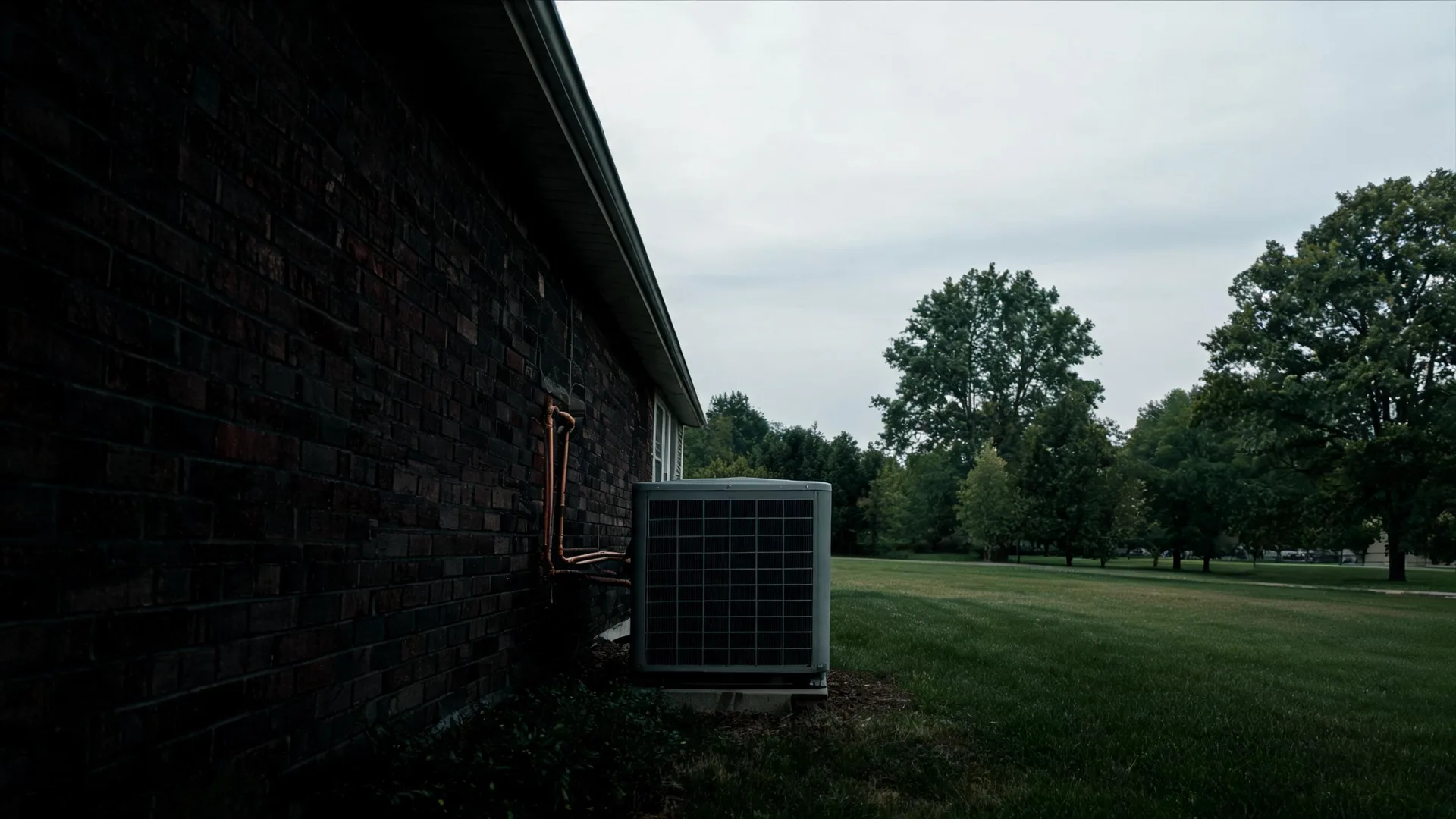
A contractor quoting a central AC repair here starts with a system that has barely run. Homes in Hancock County, ME have essentially no cooling season — no month of the year is warm enough to call for it. Compressors that sit idle through every summer still degrade: seals dry, refrigerant migrates, and the first call for cooling after years of disuse is often the first sign something has already gone wrong. The fault that surfaces on the one warm day a homeowner finally switches the unit on has usually been building for seasons, undetected because the system had no reason to run.
Half the homes in Hancock County, Maine were built in 1982 or earlier (2020-2024 ACS 5-year). A house built that long ago was cooled, if it was cooled at all, by equipment that bears little resemblance to what sits in it now. What that history means for a repair call is specific: once a contractor opens the unit, the question is whether the components that failed are still manufactured, or whether the job becomes a search for parts that suppliers have stopped stocking. That answer is not obvious from the outside.
The Parts of a Central AC a Contractor Checks First
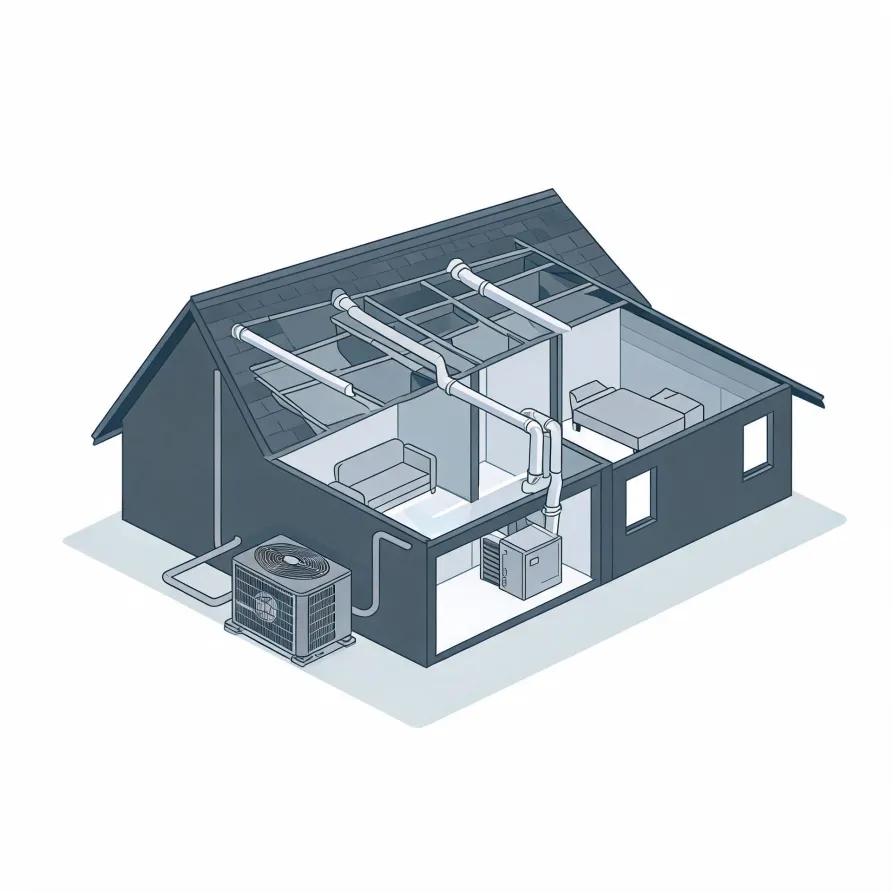
The outdoor condenser unit sits outside the house, usually on a concrete pad at ground level, and it is where heat pulled from inside the home gets released. The indoor air handler or furnace coil assembly lives in a basement, closet, or attic and holds the evaporator coil, which is the piece a contractor looks at early when the system is running but not cooling.
The refrigerant lines run between those two units, and a fault anywhere along them shows up as a pressure problem the contractor reads at both ends. The thermostat, mounted on an interior wall, is the control point and is checked when symptoms suggest the system is not responding correctly rather than failing outright.
The drawing shows the general layout of a central AC system, and a licensed contractor determines which components apply to the specific installation in your house.
Find a contractor in Hancock CountyHancock County, by the numbers
155 severe weather events were recorded in Hancock County, Maine between 2015 and 2024.
NOAA National Centers for Environmental Information, Storm Events Database, bulk CSV export, events 2015-01-01 through 2024-12-31.Half the homes in Hancock County, Maine were built in 1982 or earlier (2020-2024 ACS 5-year).
U.S. Census Bureau, 2020-2024 American Community Survey 5-Year EstimatesHancock County, Maine holds 40,765 housing units (2020-2024 ACS 5-year).
U.S. Census Bureau, 2020-2024 American Community Survey 5-Year EstimatesOwners occupy 78.5% of the occupied homes in Hancock County, Maine (2020-2024 ACS 5-year).
U.S. Census Bureau, 2020-2024 American Community Survey 5-Year EstimatesCodes & Standards Governing Central AC Repair in Hancock County, Maine9 sourced rules and standards
What happens when a contractor comes out
Split-system central air conditioners rated below 45,000 Btu/h manufactured on or after January 1, 2023 must meet a federal minimum of 13.4 SEER2.
Split-system central air conditioners rated at or above 45,000 Btu/h manufactured on or after January 1, 2023 must meet a federal minimum of 13.4 SEER2.
Split-system central air conditioners manufactured between January 1, 2015 and December 31, 2022 had to meet 13 SEER, the metric that preceded SEER2.
Single-package central air conditioners manufactured on or after January 1, 2023 must meet a federal minimum of 13.4 SEER2.
Space-constrained central air conditioners manufactured on or after January 1, 2023 must meet a federal minimum of 11.7 SEER2.
Federal efficiency standards for split-system central air conditioners and heat pumps are set on each certified combination of outdoor unit and indoor coil rather than on the outdoor unit alone.
Residential and light commercial air conditioning and heat pump systems assembled in the field, including mini-splits and unitary systems, may not be installed on or after January 1, 2025 using a refrigerant with a global warming potential above 700.
A field-assembled system whose specified components were all manufactured or imported before January 1, 2025 carries no installation compliance date under the refrigerant restrictions and may still be installed.
Licensing Rules for HVAC Repair in Hancock County, Maine
Maine licenses the fuel-burning side of heating rather than HVAC as a trade: a Maine Fuel Board licence is required to install or service solid fuel, oil, propane or natural gas burning equipment, including pellet-fired central heating appliances. Air conditioning is not named anywhere in the chapter.
Severe Weather Events in Hancock County
Storm activity puts real strain on central AC systems: hard starts after power disruptions, coils working against humidity spikes, compressors cycling through sudden load changes. How much of that pressure a unit absorbs depends on what the local weather actually delivers, which is why the record for Hancock County belongs on a page about keeping that equipment running.
155 severe weather events, 2015–2024. Source: NOAA National Centers for Environmental Information, Storm Events Database.